Low Boiler Pressure? How to Top Up the Boiler Safely
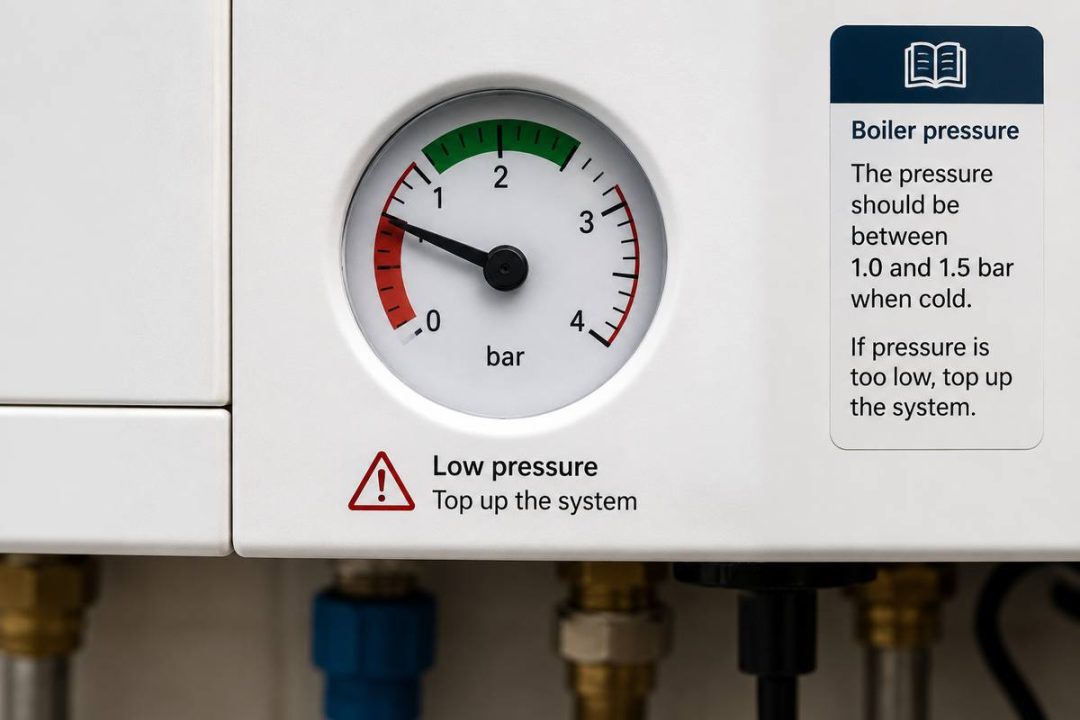
If the boiler at Anchor and Hope has no heating or hot water, the pressure may be too low. Please check the pressure gauge and complete the safe steps below before opening a maintenance task.
Tenants are expected to monitor the boiler pressure and follow the provided instructions where the pressure simply needs topping up. If you are unsure how to operate the controls, please request assistance or a video call rather than adjusting unfamiliar valves.
Important Safety Notice
- Do not remove the boiler cover.
- Do not touch internal components, wiring, or gas controls.
- Only use the external filling controls shown in the property-specific video.
- Do not force any valve or control.
- Do not continue filling once the correct pressure has been reached.
- If you smell gas, stop immediately, leave the property and call the National Gas Emergency Service on 0800 111 999.
- If there is a visible leak, stop and open an urgent maintenance task.
Video Guide
Please watch the property-specific video below before attempting to increase the boiler pressure.
How to Check and Restore the Boiler Pressure
1. Check the pressure gauge
Locate the pressure gauge, also called the manometer, underneath or on the front of the boiler.
Check the pressure while the heating is off and the boiler has cooled down. If the pressure is below 1 bar, the system may need to be topped up.
Please take a clear photo of the pressure gauge before making any adjustment.
2. Identify the correct filling controls
Only use the filling valve or controls shown in the video above. Do not turn other valves underneath the boiler, as these may control the gas supply, heating pipes, or water supply.
If the controls on the boiler do not match the video, stop and request assistance.
3. Increase the pressure slowly
Slowly operate the filling control as shown in the video. You should normally hear water entering the heating system and see the pressure gauge begin to rise.
Watch the gauge continuously while topping up the pressure.
4. Stop between 1 and 1.5 bar
When the heating is off and the system is cold, stop filling when the pressure reaches approximately 1 to 1.5 bar.
Do not deliberately increase the cold pressure to 2 bar. The pressure may naturally rise when the heating is operating.
5. Close the filling controls fully
Once the correct pressure has been reached, return the filling valve or valves to the fully closed position. Leaving a filling valve partly open can cause the pressure to continue rising.
6. Take an after photo
Take a clear photo showing the pressure after the system has been topped up. Keep both the before and after photos in case the issue needs to be reported.
7. Reset the boiler once if required
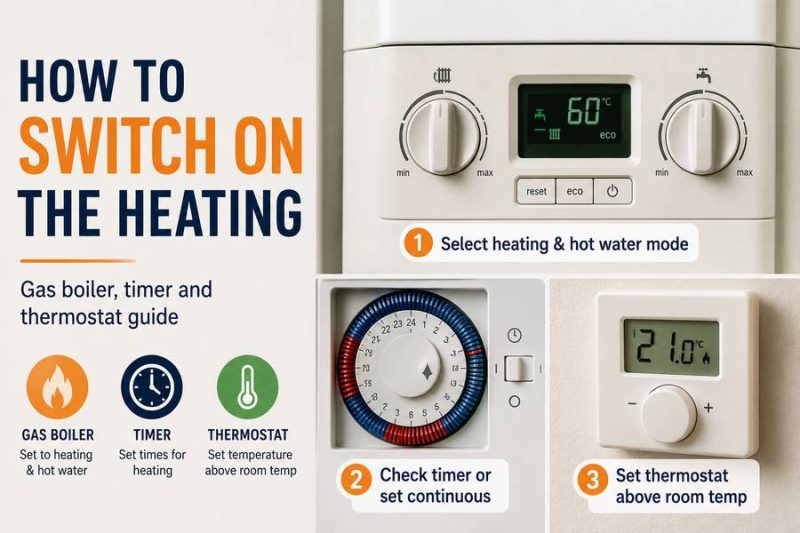
If the boiler does not restart automatically, follow the reset instructions on its external control panel. Reset it once only.
If the same fault returns, do not repeatedly reset or refill the boiler.
If You Are Unsure
If you are unsure which control to use or the boiler does not match the video, please request a video call or open a maintenance task.
Do not operate unfamiliar valves or remove any boiler covers.
When to Open a Maintenance Task
Please open a maintenance task if:
- The controls do not match those shown in the video
- The pressure does not rise when the correct filling control is opened
- The pressure rises too quickly or goes above the normal range
- The pressure drops below 1 bar again shortly after topping up
- You can see water leaking from the boiler, radiators, valves, or pipework
- The boiler remains in fault after the pressure has been corrected
- There is still no heating or hot water
Photos and Information Required
When opening the maintenance task, please provide:
- A photo of the pressure gauge before topping up
- A photo of the pressure gauge after topping up
- A photo of the boiler display and any fault code
- A photo of the filling controls underneath the boiler
- A photo or video of any visible leak
- Confirmation that you watched the property-specific video
- Confirmation that the filling controls were closed fully afterwards
- Details of whether the pressure drops again and how quickly
Providing this information allows us to assess the issue and arrange the correct heating engineer without unnecessary delays.
Possible Contractor Charges
If an engineer attends and the only issue is low boiler pressure that could have been safely restored by following the property-specific instructions, the call-out charge may be recharged to the tenant.
If the boiler repeatedly loses pressure, has a leak, or has a genuine mechanical or electrical fault not caused by tenant use, the landlord will normally be responsible for arranging the repair.