Some windows and glazed doors use additional safety catches, release pins or multipoint locking mechanisms. If these controls are not operated correctly, the window or door may appear stuck or may not close and lock fully.
Tenants should follow the operating steps below before reporting a fault. Do not force the handle, frame, safety pins or locking mechanism, as this may cause damage.
Important Safety Notice
```- Keep your fingers away from hinges, closing edges and locking points.
- Do not slam or force the window or door closed.
- Do not use tools on the handle, safety pins or lock.
- Do not remove restrictors, catches or safety devices.
- Do not continue pulling the handle if it will not move normally.
- If the glass is cracked, the frame is loose or the door is unsafe, stop using it and report the issue immediately.
How to Close a Window With Side Safety Pins
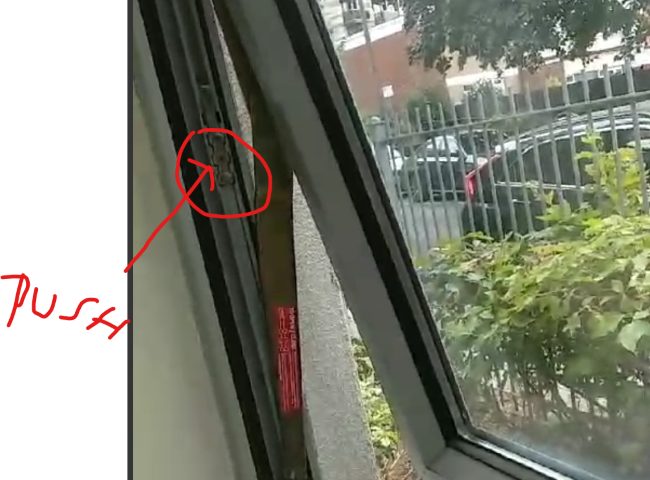
Some windows have safety or release pins positioned along the side edge of the opening section. These pins may need to be pressed fully before the window can return to its closed position.
1. Check the side of the window
Look along the side edge of the open window for one or more small pins, catches or release buttons.
Make sure there are no curtains, objects or debris preventing the window from closing.
2. Support the window
Hold the window securely with one hand. Do not allow the window to swing or close suddenly.
3. Press the safety pins fully
Press the side safety pins or release buttons fully inward. Keep them pressed while gently moving the window towards the frame.
Do not use excessive force. If the pins do not move normally, stop and report the issue.
4. Close the window gently
While holding the pins in, guide the window carefully back into the frame. Once the window is correctly aligned, release the pins.
5. Operate the handle
Turn the window handle into the fully closed position. The handle should move smoothly without excessive pressure.
How to Close and Lock a Glazed Door
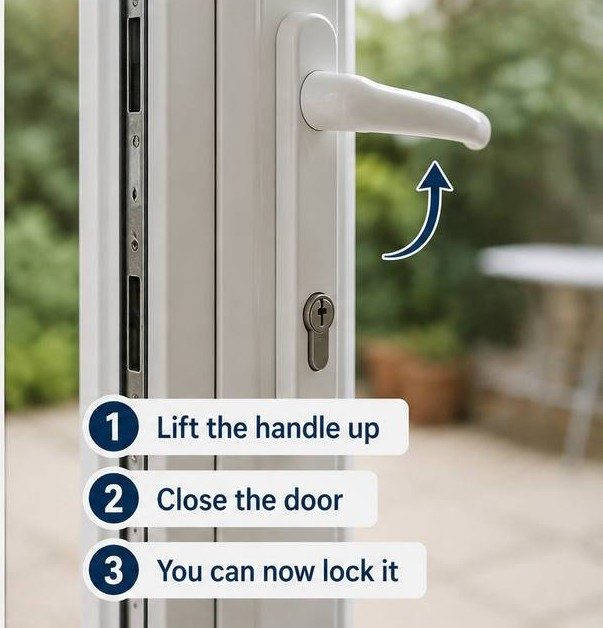
Many glazed, balcony and uPVC-style doors use a multipoint locking system. Closing the door brings it into the frame, lifting the handle engages the locking points, and turning the key or thumb-turn secures the lock.
1. Close the door fully
Pull or push the door firmly but gently into the frame. Make sure nothing is trapped between the door and frame.
The door must be properly aligned and fully closed before the handle can normally be lifted.
2. Lift the handle
Lift the handle upwards until it reaches its normal stopping position. This engages the locking points along the edge of the door.
Do not force the handle if it stops partway or requires unusual pressure.
3. Lock the door
Once the handle has been lifted fully, turn the key or thumb-turn to lock the door.
The key may not turn if the handle has not been raised fully or the door is not correctly aligned.
4. Check that the door is secure
Gently test the handle and door to confirm that the locking points have engaged.
How to Unlock and Open the Door
- Turn the key or thumb-turn to unlock the door.
- Push the handle fully down to release the multipoint locking mechanism.
- Open the door normally.
Do not pull the door open while the handle remains raised or the locking points are still engaged.
If the Window or Door Still Will Not Close
Before opening a maintenance task, check:
- Whether an object is trapped in the frame
- Whether curtains or blinds are obstructing the opening
- Whether the window safety pins are fully pressed
- Whether the door is completely against the frame
- Whether the glazed door handle has been lifted before locking
- Whether dirt or debris is blocking the bottom or side locking points
Do not attempt to adjust hinges, locking plates, keeps, rollers or internal lock components yourself.
When to Open a Maintenance Task
Please report the issue if:
- The safety pins are stuck, loose or damaged
- The window does not align with the frame
- The window handle is stuck or spins without operating the lock
- The glazed door handle will not lift after the door is fully closed
- The key will not turn after the handle has been lifted
- The door repeatedly opens after being locked
- The frame, hinge or handle is loose
- The window or door is allowing rainwater into the property
- The glass is cracked or damaged
- The door cannot be secured, creating a security risk
Photos and Information Required
When opening a maintenance task, please provide:
- A clear photo of the complete window or glazed door
- A photo of the side safety pins or catches
- A photo of the handle and locking edge
- A photo showing any visible gap between the frame and opening section
- A short video showing what happens when you try to close it
- Confirmation that the safety pins were pressed fully
- Confirmation that the glazed door handle was lifted before turning the key
- Details of whether the issue affects closing, locking, opening or all three
- Details of whether the problem started suddenly or became worse gradually
Providing this information helps us identify whether the problem relates to operation, alignment, hinges, the handle or the locking mechanism.
Possible Contractor Charges
If a contractor attends and the window or door is working correctly but the issue arose because the safety pins or lift-to-lock handle were not being operated as required, the call-out charge may be recharged to the tenant.
If the issue is caused by a defective handle, damaged lock, failed hinge, misaligned frame or another repair problem not caused by tenant misuse, the landlord will normally be responsible for arranging the repair.