Black mould commonly develops on bathroom silicone, grout, tiles, shower screens and ceilings because these areas are regularly exposed to steam, condensation and standing water.
Tenants are expected to keep the bathroom reasonably clean, use the extractor fan and take routine steps to prevent surface mould. Small areas caused by condensation can often be treated with a suitable bathroom mould cleaner.
However, recurring or widespread mould may indicate a faulty extractor fan, a leak, failed silicone, damaged grout or another repair issue. These problems should be reported through the maintenance system with clear photographs.
Important Safety Notice
```- Wear waterproof gloves and eye protection when using mould-removal products.
- Keep the bathroom ventilated while cleaning.
- Always follow the instructions printed on the product.
- Test the product on a small, less visible area first.
- Never mix bleach, mould remover, vinegar, ammonia or other cleaning products.
- Keep cleaning products away from children and pets.
- Do not stand on the bath, toilet, sink or unstable furniture to reach the ceiling.
- If mould is extensive or cleaning may affect your health, stop and report the issue.
Why Mould Develops Around Silicone and Tiles
Bathroom mould is encouraged by persistent moisture and surfaces that are not given enough time to dry. Common causes include:
- Steam and condensation after showering or bathing
- An extractor fan not being used or not working correctly
- Standing water around the bath, shower screen or silicone joints
- Bottles and bathroom products being left against wet silicone
- Soap, shampoo and body-product residue
- Dirty, damaged or deteriorated grout
- Silicone that has separated from the bath, tray or tiles
- Leaks from pipework, the shower screen or surrounding seals
Avoid leaving shampoo bottles, soap containers and other products directly against the bath edge, shower screen or silicone joints. They can trap water underneath and prevent the area from drying.
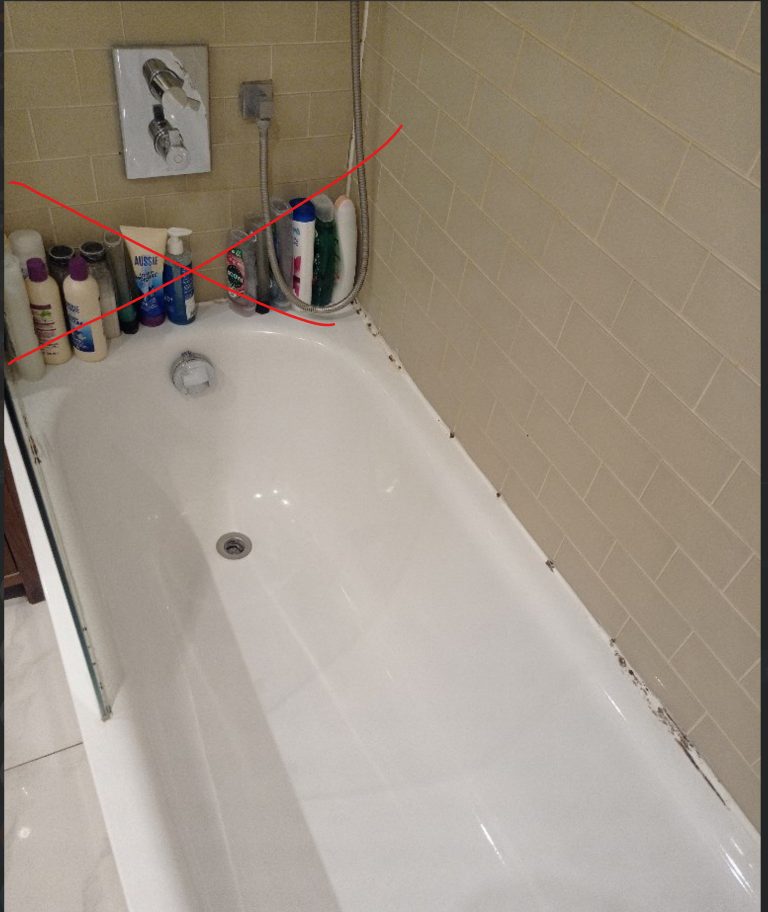
How to Clean Mould From Bathroom Silicone
1. Ventilate the bathroom
Switch on the extractor fan and open the window where one is available. Keep the bathroom door closed while cleaning to avoid spreading fumes or moisture into other rooms.
2. Remove bottles and bathroom products
Remove soap, shampoo bottles and other products from the bath edge, shower tray and surrounding tiles. Clean and dry the area underneath them.
3. Apply a suitable mould cleaner
Use a product labelled as suitable for bathroom mould, silicone and tiles. Apply it according to the manufacturer’s instructions and leave it in place only for the recommended period.
Do not combine the product with bleach, vinegar or any other cleaner.
4. Wipe and rinse the area
Wipe the silicone with a suitable cloth or non-abrasive sponge. Rinse the area where required by the product instructions and dry it thoroughly.
5. Check the condition of the silicone
Cleaning may remove surface mould, but black staining that has penetrated deeply into the silicone may remain.
The silicone may need to be replaced if it is:
- Permanently black after cleaning
- Peeling away from the bath, shower tray or tiles
- Split, cracked or missing
- Soft, loose or deteriorated
- Allowing water to pass behind the bath or shower
Do not remove silicone yourself unless you have been specifically authorised to do so. Incorrect removal or replacement can allow water to leak behind the bath or shower.
How to Clean Mould From Tiles and Grout
1. Apply bathroom mould or grout cleaner
Use a product suitable for the tile and grout type. Follow the product instructions carefully.
2. Clean with a suitable brush
Use a small grout brush or non-abrasive cleaning brush to clean the affected joints. Avoid metal brushes or sharp tools that could damage the grout or tiles.
3. Rinse and dry
Remove the cleaning-product residue and dry the tiles and grout thoroughly.
4. Check for damaged grout
Please report the issue if the grout is cracked, crumbling, missing or allowing water to enter behind the tiles. Cleaning alone will not repair damaged grout.
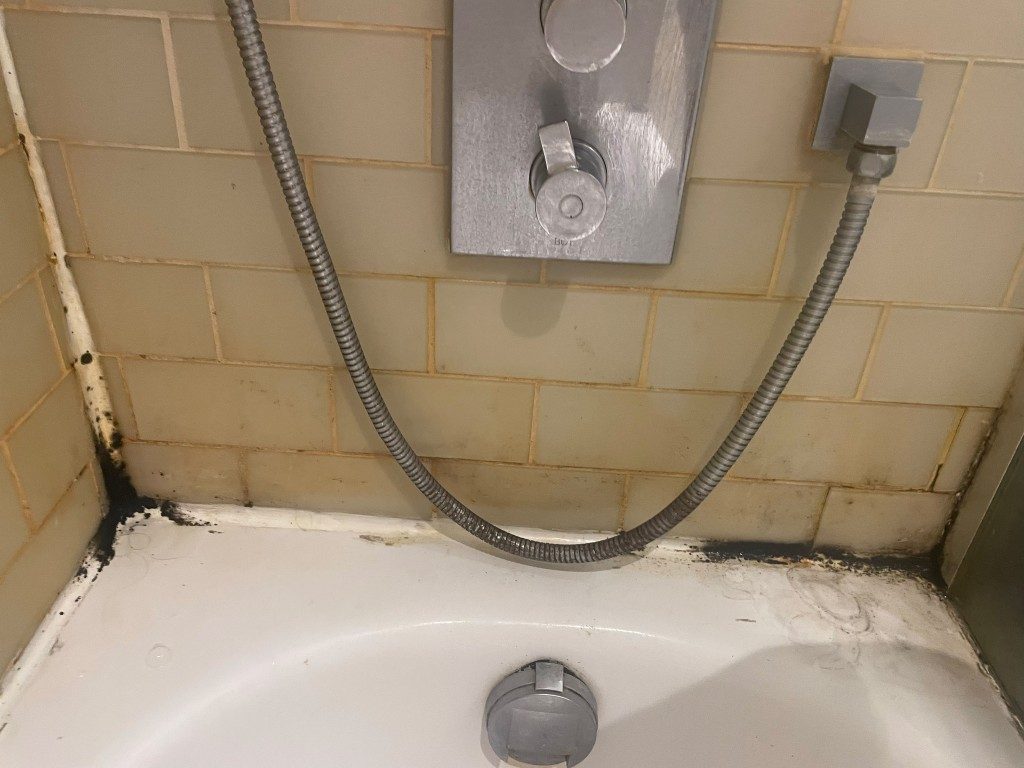
How to Prevent Bathroom Mould Returning
1. Use the extractor fan
Switch the extractor fan on whenever showering or bathing. Leave it running afterwards where the controls allow this.
Do not cover or block the fan or ventilation grille.
2. Open the window where available
Open the bathroom window after bathing or showering to allow humid air to escape.
3. Keep the bathroom door closed during showers
Keeping the door closed helps prevent steam from travelling into bedrooms, hallways and other colder parts of the property.
4. Remove standing water
Use a squeegee, cloth or towel to remove water from:
- The bath edge
- The shower tray
- The shower screen
- Tiles and grout
- Silicone joints
- Window ledges
5. Keep products away from silicone joints
Store shampoo, soap and cleaning products on a suitable shelf or rack rather than leaving them on wet silicone or grout.
6. Spread out wet towels and shower curtains
Do not leave wet towels in a pile. Spread towels and shower curtains out so they can dry properly.
7. Clean the bathroom regularly
Remove soap residue and early signs of mould before they spread. Regular light cleaning is usually easier and more effective than waiting until the silicone or grout becomes heavily stained.
Mould on the Bathroom Ceiling
Ceiling mould often indicates that moisture is not being removed effectively. Check that the extractor fan is operating when the bathroom is in use.
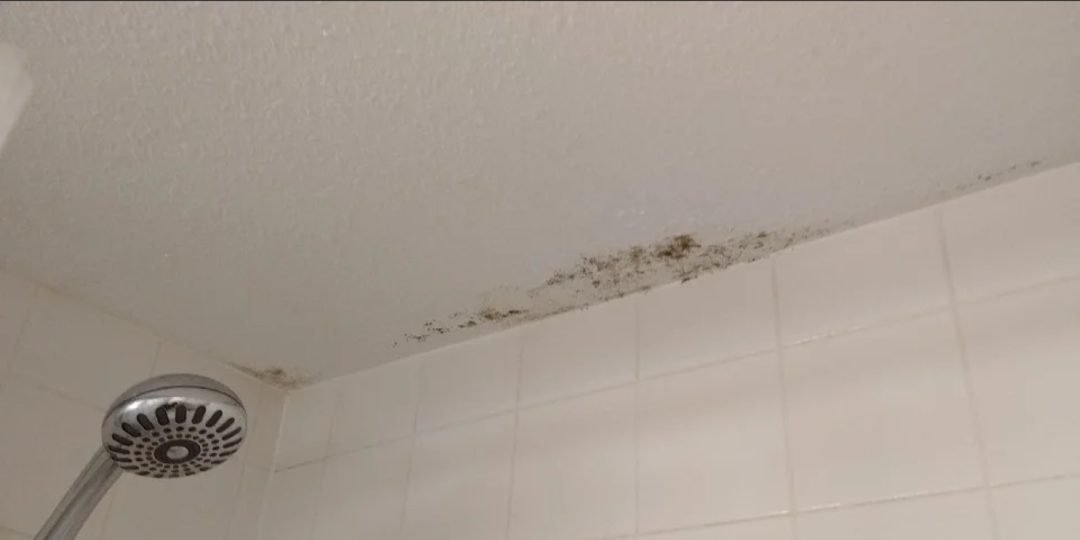
Check the extractor-fan cover
If the accessible outside grille is dusty, switch the fan off and gently clean the visible cover using a dry or slightly damp cloth.
Do not dismantle the fan, remove electrical covers or touch internal wiring. If the fan does not run, is unusually noisy or appears ineffective, open a maintenance task.
Cleaning a small accessible ceiling area
A small area may be cleaned using a suitable mould product if it can be reached safely with a stable stepladder.
Do not stand on sanitary fittings. Report mould that is widespread, difficult to reach or repeatedly returns after cleaning.
When to Open a Maintenance Task
Please report the issue if:
- The silicone is split, loose, peeling or missing
- Water is leaking behind the bath, shower screen or tiles
- The grout is cracked, crumbling or missing
- The extractor fan does not work
- The mould is widespread or affecting the ceiling
- The mould returns quickly after cleaning
- There is a wet patch, leak, bubbling paint or damaged plaster
- The bathroom has no effective ventilation
- The issue is affecting your health
Photos and Information Required
When opening a maintenance task, please upload:
- Close-up photos of the affected silicone, grout or ceiling
- Wider photos showing the bath, shower or bathroom layout
- A photo showing whether the silicone is loose, split or missing
- A photo of any cracked or missing grout
- A video showing whether the extractor fan is operating
- Photos of any visible leak, wet patch or water damage
- Confirmation that the affected surface has been cleaned
- Confirmation that the fan and window are being used
- Details of how quickly the mould returned after cleaning
Providing this information helps us determine whether the issue requires cleaning, silicone replacement, grout repair, ventilation work or investigation of a leak.
Possible Contractor Charges
If a contractor attends and the issue is found to consist only of routine surface mould or grout staining caused by insufficient cleaning, standing water or failure to use the available ventilation, the cost may be recharged to the tenant.
Indicative contractor costs may include:
- Sanitary silicone: approximately £10–£15 for materials
- Handyman attendance and silicone replacement: approximately £50–£90, depending on the work required
- Professional grout cleaning: approximately £50–£80
- Ceiling mould cleaning or treatment: approximately £80–£150, depending on the affected area
These amounts are estimates only. The actual cost will depend on the contractor’s rates, the extent of the work and whether additional repairs are required.
If the mould is caused by a faulty extractor fan, leak, failed seal due to age, structural defect or another repair issue not caused by tenant use, the landlord will normally be responsible for arranging the necessary work.