How to Fix a Dishwasher That Is Not Cleaning Properly
If your dishwasher is not washing properly, leaving food residue on dishes, smelling bad, or not draining as expected, the most common cause is a dirty or blocked filter. Food, grease, labels, glass fragments, and other debris can collect in the filter and stop the dishwasher from working correctly.
Tenants are responsible for using the appliance correctly and following the basic troubleshooting steps below before an appliance engineer is booked. In many cases, cleaning the filter and adding dishwasher salt will resolve the issue without the need for a contractor visit.
Once the troubleshooting steps have been completed, if the dishwasher is still not washing properly, please open a maintenance task and upload the required photos. This helps us arrange an appliance engineer without unnecessary delays.
Important Safety Notice
- Switch off the dishwasher before removing or cleaning internal parts.
- Be careful when checking the filter, as there may be sharp objects such as broken glass.
- Do not use normal washing-up liquid inside the dishwasher, as it can create excessive foam.
- If using washing-up liquid to clean the filter in the sink, rinse the filter properly before refitting it.
- Only use dishwasher salt, dishwasher tablets, rinse aid, and products suitable for dishwashers.
- If you notice leaking, burning smells, electrical issues, or damaged parts, stop using the appliance and report the issue immediately.
Video Guide
The video below shows how to remove and clean a dishwasher filter.
How to Clean the Dishwasher Filter
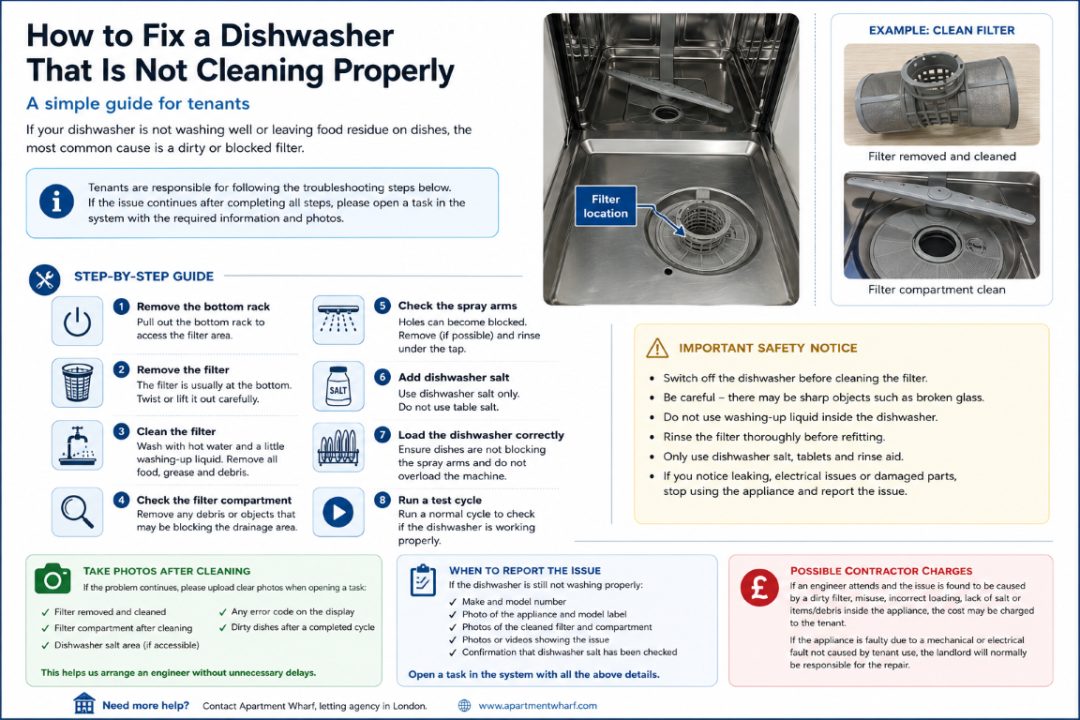
1. Remove the bottom rack
Pull out the bottom rack of the dishwasher so you can access the filter area at the bottom of the appliance.
2. Remove the filter
The filter is usually located at the bottom of the dishwasher. Carefully twist or lift it out, depending on the model. Do not force it if it feels stuck.
3. Clean the filter properly
Wash the filter in the sink using hot water and a small amount of washing-up liquid. Remove any food, grease, debris, labels, or other material caught in the filter.
Rinse the filter thoroughly before putting it back into the dishwasher.
4. Check the filter compartment
Before refitting the filter, check the filter compartment at the bottom of the dishwasher. Remove any visible food, debris, or objects that may be blocking the drainage area.
5. Check the spray arms
If dishes are still coming out dirty, check the spray arms. The small holes in the spray arms can become blocked by food or limescale. If possible, remove the spray arms and rinse them under the tap.
6. Add dishwasher salt
Dishwasher salt helps the appliance work properly, especially in hard-water areas. If the salt level is low, the dishwasher may leave marks, residue, or cloudy stains on dishes and glasses.
Use dishwasher salt only. Do not use table salt or any other type of salt.
7. Load the dishwasher correctly
Make sure dishes are not blocking the spray arms and that plates, pans, and cutlery are not overloaded. If the spray arms cannot rotate properly, the dishwasher will not clean correctly.
8. Run a test cycle
After cleaning the filter, checking the spray arms, and adding dishwasher salt, run a normal cycle to check whether the dishwasher is now washing correctly.
Take Photos After Cleaning
If the dishwasher is still not washing properly after completing the steps above, please take clear photos before opening a maintenance task.
Please upload photos showing:
- The filter removed and cleaned
- The filter compartment after cleaning
- The dishwasher salt area, if accessible
- Any error code shown on the display
- Photos or videos showing the issue, such as dirty dishes after a completed cycle
These photos confirm that the troubleshooting steps have been completed and help us arrange the correct appliance engineer more quickly.
When to Report the Issue
If the dishwasher is still not washing properly after the filter has been cleaned, the spray arms have been checked, and dishwasher salt has been added, please open a maintenance task in the system.
When opening the task, please include:
- The make and model number of the dishwasher
- A photo of the front of the appliance
- A photo of the model label, usually found around the door frame or side of the door
- A clear photo of the cleaned filter
- A clear photo of the cleaned filter compartment
- A photo or video showing the issue
- Any error code shown on the display
- Confirmation that dishwasher salt has been checked or topped up
Please note that an engineer cannot usually be booked until the basic troubleshooting has been completed and the required information has been provided. This avoids unnecessary contractor visits and helps prevent delays.
Possible Contractor Charges
If an appliance engineer attends and the issue is found to have been caused by a dirty filter, blocked filter, misuse, incorrect loading, lack of dishwasher salt, or items/debris inside the appliance, the cost of the call-out and repair may be charged to the tenant.
If the appliance is faulty due to a mechanical or electrical fault not caused by tenant use, the landlord will normally be responsible for arranging the repair.